
September 14, 2026
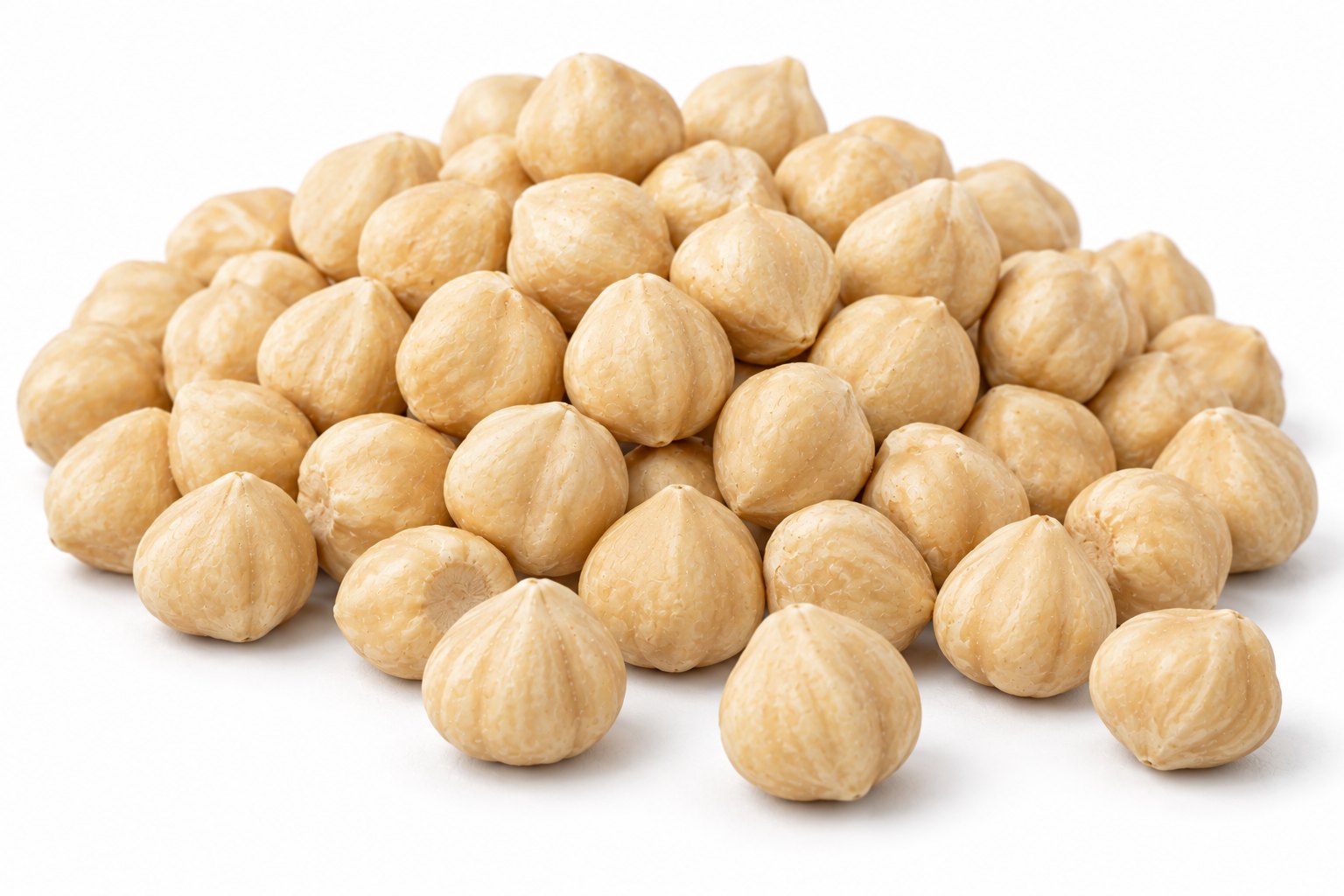
Raw, roasted, blanched, diced, milled or milled to a paste — the same kernel reaches a production line in very different states, and the wrong choice shows up as rework rather than as a line on an invoice. This is how to pick.
The useful question is not “which hazelnut is best” but “what does my process do to the kernel after it arrives”. Three things decide the answer: whether the pellicle (the brown skin) is acceptable in the finished product, whether your line applies heat, and whether shape survives to the plate.
The kernel arrives protected, with the longest natural shelf life of any form and the lowest processing cost at origin. You take on cracking and sorting. Sensible for buyers with shelling capacity or for retail and gift channels where the shell is part of the presentation. See hazelnuts in shell.
The default industrial input. Pellicle intact, no heat applied, so you control the roast curve entirely. Choose this when roasting is part of your recipe identity, or when the kernel goes into a product that is baked anyway. See raw hazelnut kernels.
Heat applied at origin to a defined profile. You gain consistency and lose a processing step; you also fix the flavour before the product reaches you, so the roast profile becomes a specification item rather than a process variable. Specify light, medium or dark, and state it in the contract. See roasted hazelnuts.
The pellicle is removed. Choose blanched when the brown skin would be visible, bitter or texturally wrong — white confectionery, pale creams, fine pastes, premium whole-nut inclusions. Note two things: blanching applies heat, and it shrinks the kernel slightly, so agree whether calibre is measured before or after. See blanched hazelnuts.
Specified by particle size, not kernel calibre. The right input for bakery inclusions, toppings, cereal and ice cream, where whole-kernel uniformity would be wasted. Buying whole kernels and dicing them in-house is usually the more expensive route unless you already own the equipment. See hazelnut pieces.
Milled forms. Flour (meal) carries the nut character into doughs and batters and is the practical way to add hazelnut to a gluten-conscious recipe; paste is the base of praline, gianduja, fillings and spreads, with roast level, texture and sugar content set to your recipe. See hazelnut flour and hazelnut paste.
Every form still needs the same four clauses: the grade class, the moisture ceiling, the aflatoxin category and the packaging. Our calibre and grading guide covers the first, and the aflatoxin guide covers the third.
All six forms come from the same orchards in Giresun and the same season’s crop, so switching forms does not mean switching origin. Tell us the application and we will tell you which form fits — request a quote, or browse all products.
Talk to us
Tell us the product, calibre, packaging, volume and destination port, and we quote against that specification.

Let's grow together
Product, calibre, volume and destination — send those and we come back with a quotation and a sample offer.
info@edorahazelnuts.com · +90 544 425 6091 · Giresun, Türkiye
Necessary cookies keep the site working. Analytics and marketing cookies are only set if you accept.