
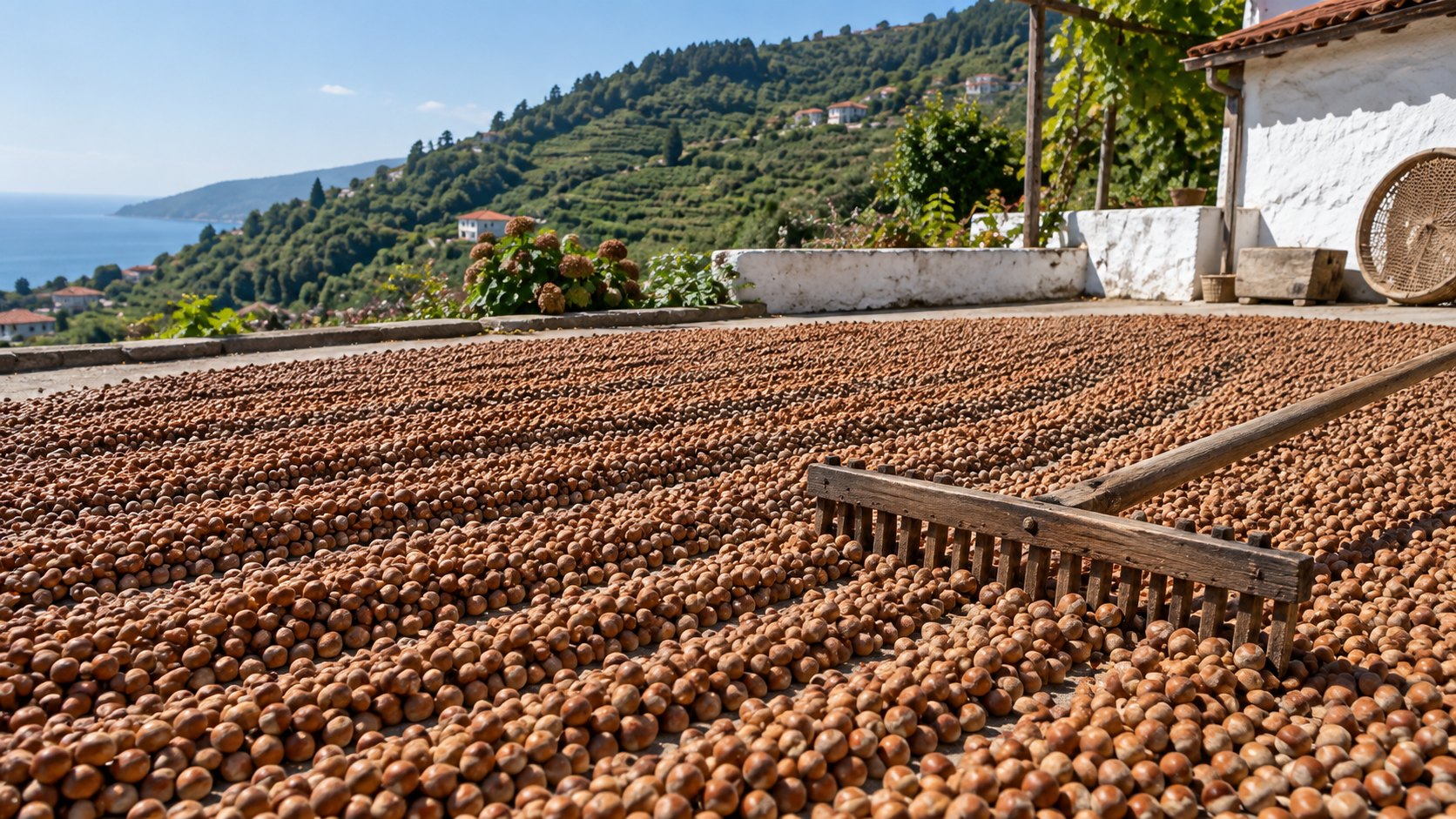
“Giresun quality” is the most-used phrase in the hazelnut trade and the least-examined. It is worth knowing what the province actually contributes, what the Tombul variety contributes, and which of the two your specification is really buying.
Türkiye is the world’s largest hazelnut producer. The International Nut and Dried Fruit Council puts the country at 66% of global production on an average crop of roughly 715,000 tonnes in-shell across the 2012/13–2021/22 period, with the eastern Black Sea region — Ordu, Giresun, Samsun and Trabzon — carrying 73% of the bearing area.
So Giresun is not a boutique origin. It is a core part of the largest producing region in the world’s largest producing country, which is precisely why the name travels and why it gets attached to product that never grew there.
Three things, and none of them are marketing:
Together these produce the characteristics the trade associates with the name: a round kernel, a pellicle that releases cleanly on roasting, and a high fat content that carries flavour into paste and praline.
Tombul — “round” in Turkish — is the variety most associated with Giresun, and it is where most of the kernel behaviour a processor cares about actually comes from. Variety governs kernel shape and roundness, pellicle adhesion and therefore blanching yield, how evenly the kernel takes a roast, and fat content.
Province governs growing conditions: climate, slope, soil, harvest method. It does not, on its own, tell you what the kernel will do on your line.
The practical rule follows directly: name both. A specification that says “Giresun origin, Tombul variety, 13–15 mm, Extra Class” is a specification. One that says “Giresun quality” is an adjective, and an adjective is not enforceable at arbitration.
Most hazelnut kernel on the market is aggregated — collected from many smallholdings, pooled, graded and sold as a blend. That is a legitimate and efficient model, and for many applications it is the right one. What it cannot give you is a traceable answer to “where did this lot come from”.
Single-origin matters in three specific situations:
Because the name carries a premium, it gets used loosely. Four questions separate the two:
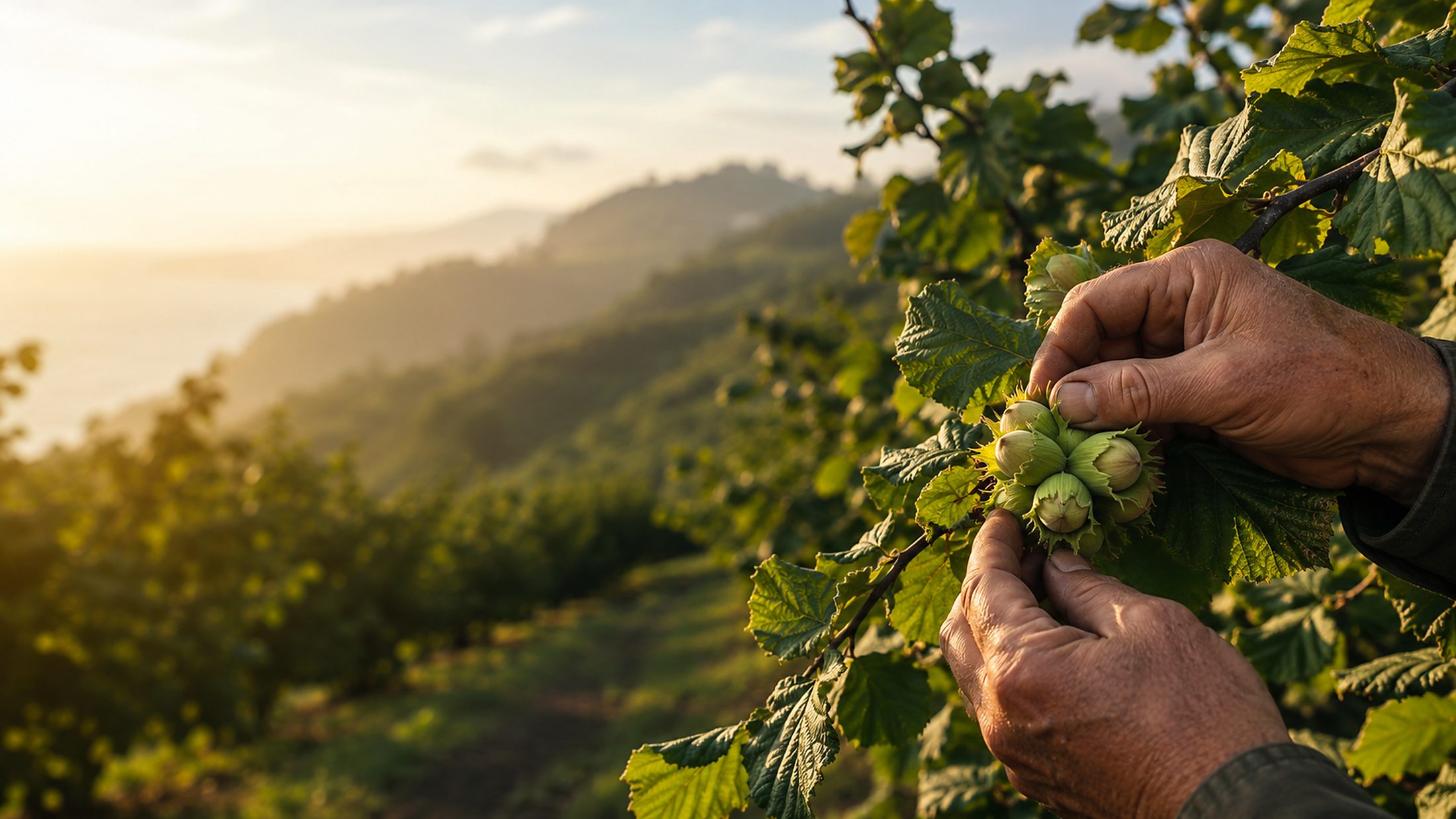
Everything we ship begins in our own orchards in Giresun and moves through our own processing — so the answer to “which block” exists, and the calibre spread you receive reflects one origin and one season rather than a pooled average. That is the whole reason the model is worth the extra cost of hand harvesting on a slope. How the crop is grown is on our orchards, and the control sequence it passes through on quality assurance.
The specification still does the work: the calibre and grading guide covers sizing and defect classes, the product forms guide covers raw, roasted, blanched and milled, and the harvest calendar covers when the crop is actually available.
Tell us the product, the volume, the destination and the crop year, and we will quote against it — request a quote, or browse all products.
Production shares and regional bearing-area figures cited from the International Nut and Dried Fruit Council industry profile of Turkish hazelnuts (April 2022). Crop sizes vary year to year.
Talk to us
Tell us the product, calibre, packaging, volume and destination port, and we quote against that specification.
Let's grow together
Product, calibre, volume and destination — send those and we come back with a quotation and a sample offer.
info@edorahazelnuts.com · +90 544 425 6091 · Giresun, Türkiye
Necessary cookies keep the site working. Analytics and marketing cookies are only set if you accept.